 The Pour Journal
Feature · Philosophy
Why it looks like nothing else
The ring is not styling. It is the argument the whole instrument is built to make.
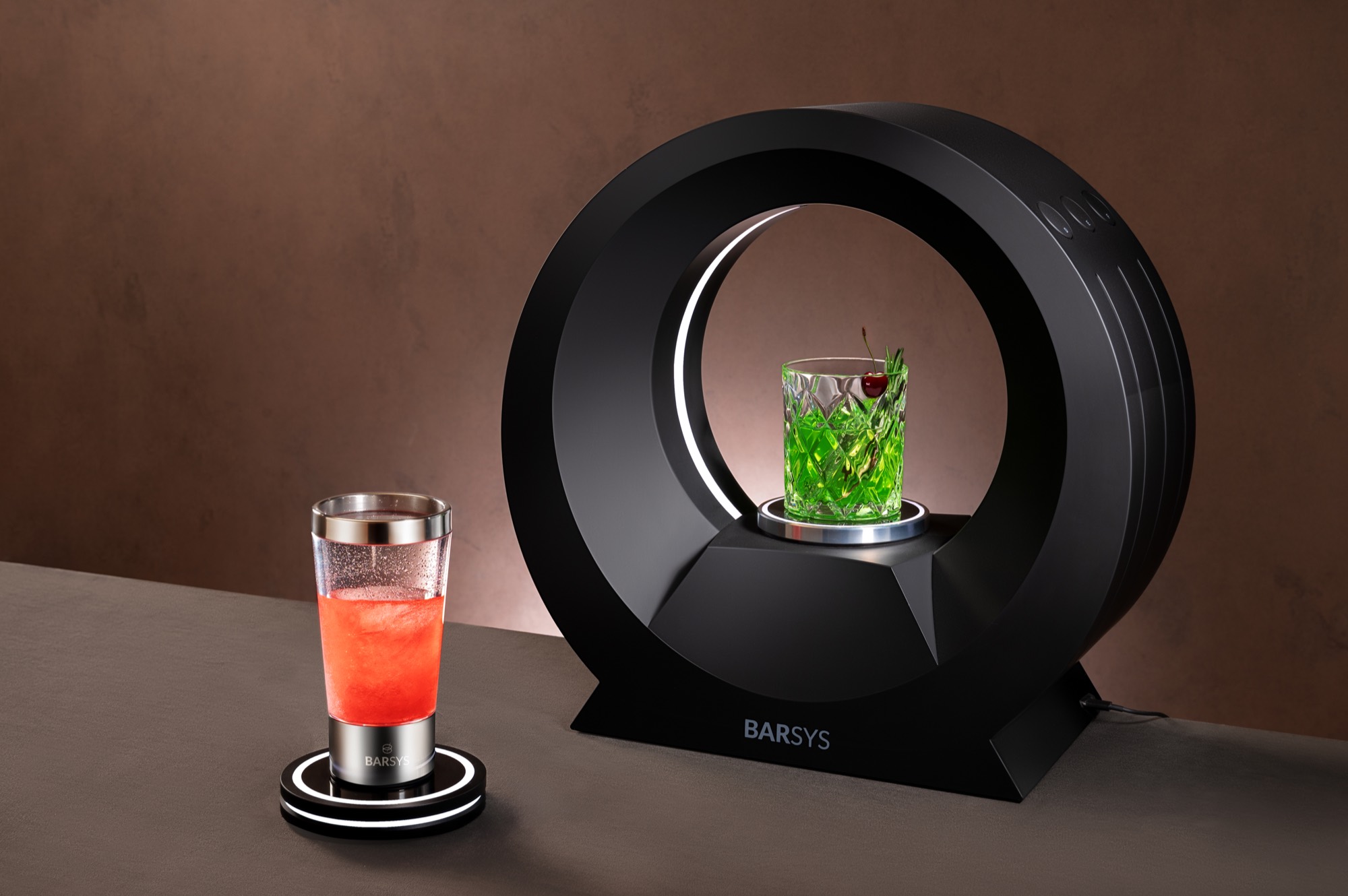
Every cocktail machine built before the Barsys 360 looked like an appliance, because it thought like one. It was a box that dispensed. You fed it pods or bottles, pressed a control, and a drink came out of a spout the way coffee comes out of a machine on a hotel counter. The object announced itself first and served the drink second. We think that order is backwards.
So we started somewhere else entirely. Not with the mechanism, not with the tank, not with the screen — but with the glass. Put a good glass on a table, pour something considered into it, and watch what happens to the room. The glass becomes the center of attention. Conversation bends toward it. That is the moment the whole product exists to protect, and the design brief was simply this: build the instrument that produces that moment and then gets out of its way.
An instrument should disappear into the ritual it serves.
The ring is the argument
Look at the 360 and the first thing you notice is a form you cannot quite place. It is not a blender, not a fridge, not a coffee maker. It is a ring — an open circle that a glass sits inside — with a single outlet above. That shape is not decoration. It is the entire thesis rendered in aluminum: the drink stands in the middle, and the machine forms a quiet horizon around it. The 360 literally surrounds the glass, holds its breath, and pours. Nothing about the geometry competes with what it makes.
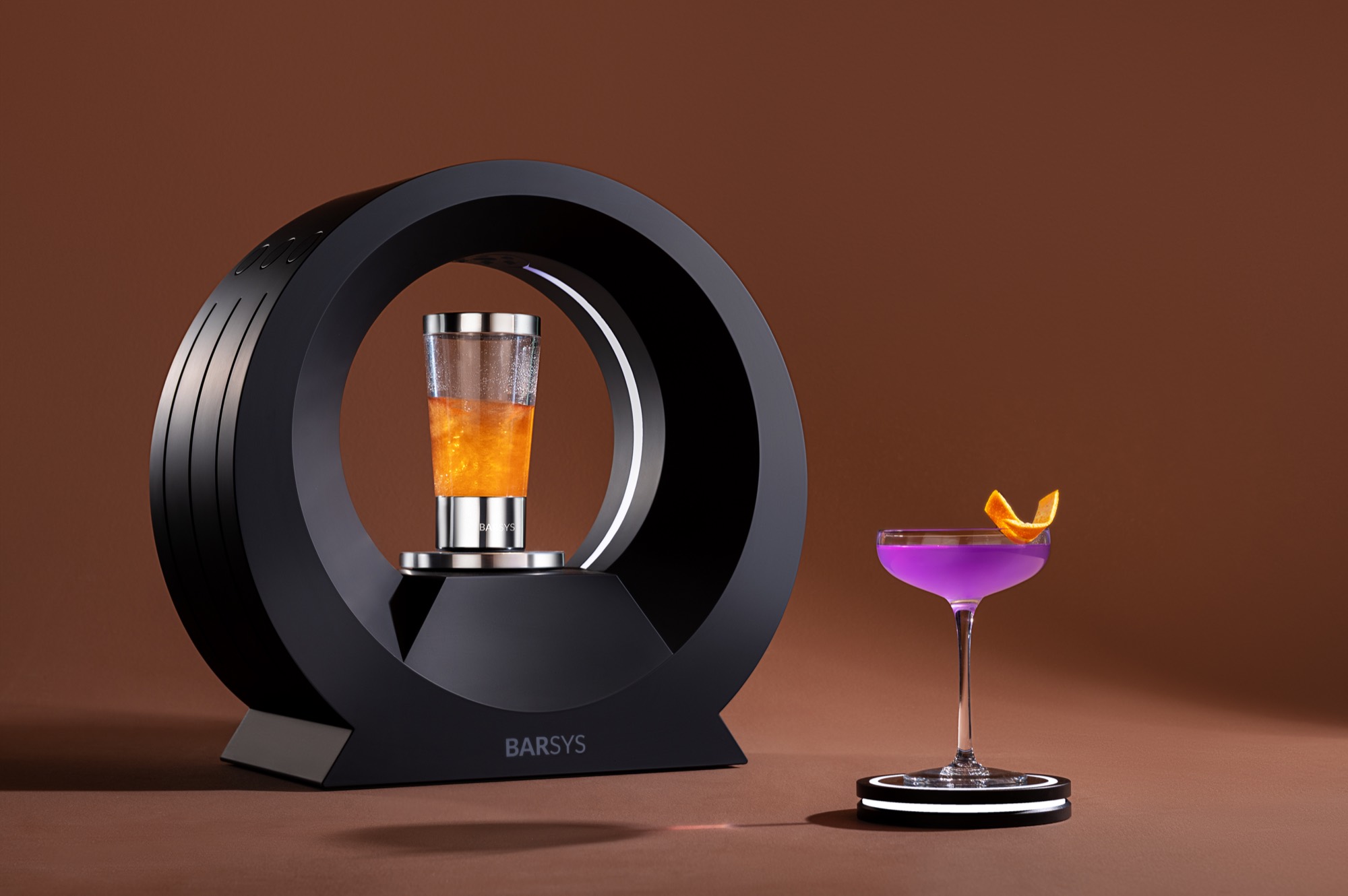
Mid-pour. The outlet is a single point; the drink is the only thing moving.
Contrast that with the machine it replaces. A typical countertop dispenser wears its function on the outside: buttons, a screen shouting recipes, branding across the front panel, a spout that looks like plumbing. It is designed to be understood at a glance in a showroom. The 360 is designed to be understood at a table, at night, with people around it — a completely different room, with completely different rules.
Matte black, because the liquid is the color
There is exactly one bold color in the experience, and it is whatever is in the glass — the amber of a whiskey build, the blush of a Paloma, the deep red of a Negroni. Everything else recedes. The body is matte black so it reflects almost nothing and never throws a highlight that pulls your eye off the drink. The finish absorbs the room instead of interrupting it.
The same logic governs every other decision. One outlet, because craft should not require construction; you should not have to assemble a beverage from three spouts and a garnish station. Near silence, because the conversation in the room matters more than the noise of the machine — the pumps and the pour are tuned to stay under the hum of a normal evening. No screen on the body, because the phone in your hand is a better screen than anything we could bolt to the front, and because a glowing panel would be one more thing competing with the glass.
Everything it knows, it performs without asking
Hiding the machinery is the easy half. The hard half is that the 360 has a great deal to hide. Inside the ring are six canisters and a pumping system precise enough to hit a recipe's ratios to the milliliter, every time, whether it is the first pour of the night or the fortieth. It knows the order ingredients should go in. It knows how a build should be timed so a spirit-forward drink lands differently than a long one. It has learned balance from thousands of recipes.
None of that intelligence is expressed as a feature you operate. It is expressed as a drink that is simply correct. That is the difference between a gadget and an instrument. A gadget makes you aware of everything it can do. An instrument makes you better at the thing you actually care about and then vanishes. A piano does not remind you it has eighty-eight keys; it just waits to be played. The 360 is built to that standard — the art is the drink, and the machine's whole ambition is to never miss.
The art is the drink. The instrument just never misses.
This is why the 360 looks like nothing else on a counter. Not because we were chasing a novel silhouette, but because we refused the premise every other machine accepted — that a cocktail machine is an appliance you look at. We built the opposite: an object you look past, straight at the glass, exactly where the evening was always supposed to happen.
This is the first entry in a short series on the design of the 360. Next: the geometry of the ring, in detail.